Monday, August 2, 2021

Employee Recruitment Process

Introduction

Recruitment is a positive procedure of searching for prospective employees and stimulating them to apply for jobs in the organization. When more people apply for jobs, then there will be scope for recruiting better persons.

Definition

Discover the source of the workforce to come across the requirements of the employee schedule and employ effective procedures for attracting the adequate workforce number to facilitate effective collection of an efficient working force (Dale Yoder).

Purpose of recruitment

  • Identify the existent and future needs of the company 
  • To increase the pool of job applicants at the lowest upright price
  • Enhancing the success rate of the selection procedure by reducing the noticeable number of qualified job applicants.
  • To meet the association's social and legal recruitment
  • To Recognize job applicants and filtering the potential job applicants for the suited role.
  • It is increasing organizational and personal effectiveness in the short-term and long term.
  • To advertise the needs of an organization and to get suitable candidates for the desired job role.

Stage of the recruitment process

  • Define the Job role
  • Generating applications from candidates
  • Monitoring the entire application and selection process
  • Offering employment

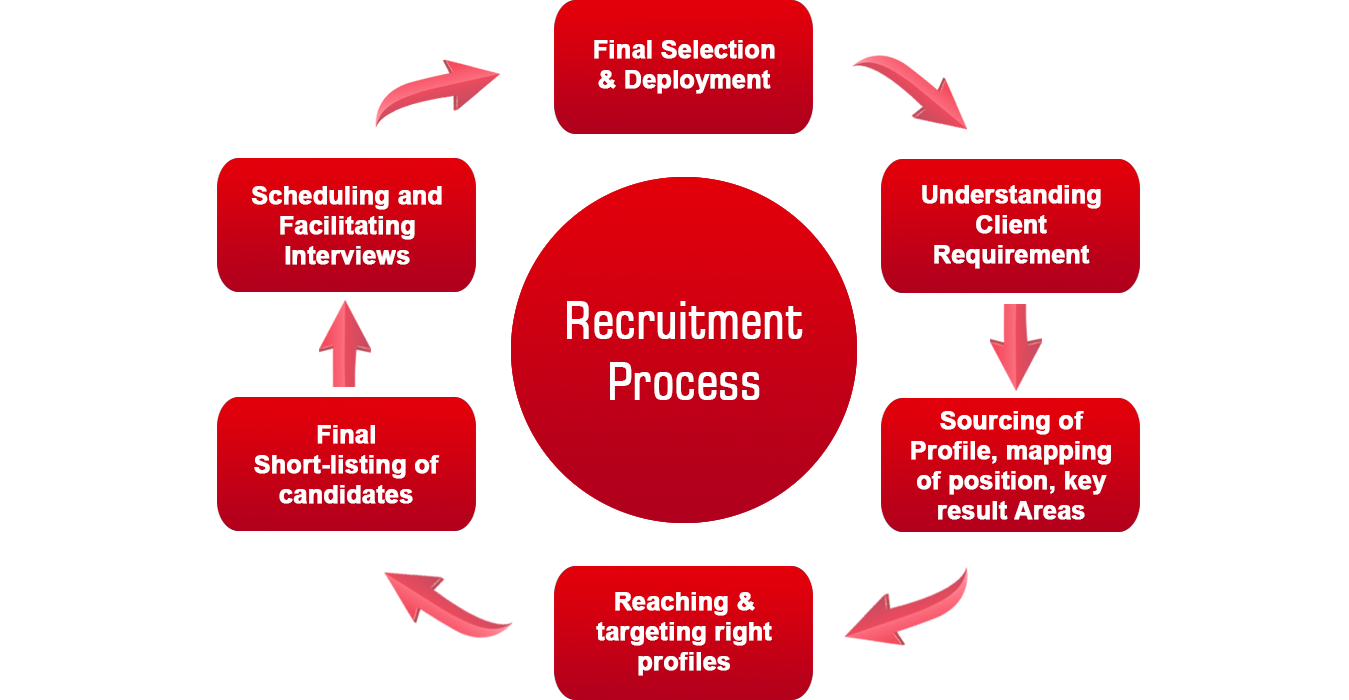
Image 1: Recruitment process (Source:www.7consultancy.com,2021)

Global context

Japanese Studies department or language Centre in Asia, posters such as ASEAN Career Fair with Japan, Top Career Asia pacific or Nikki Asian recruitment Form' greet the visitor. The poster shows the names of prominent companies such as Panasonic, Sumitomo Mitsui Banking Corporation, Japan Tobacco or Mitsubishi Corporation, announcing the ambitions of Japan's leading companies to recruit the graduates of major universities in Asia into their home operations in Japan. These activities have resulted in an inflow of young people from other parts of Asia to Japan, Adding to those non-Japan employees hired to work in Japan after graduating from Japanese universities.

Importance of recruitment process

  • It helps the organization by discovering the recruitment by job analysis activities and personnel planning.
  • Accumulate applicants with low rate 
  • Helps organise the job applications by dividing them as under-qualified or overqualified to increase the company's growth and engage the right person to the right place.
  • Employing a new and better-qualified workforce
  • A long-term plan for improving the growth of an organization 
  • The capabilities and commitment of employees ensure an organization's success 
  • Raise organizational and individual value in both the short and long term 

Video 1:The recruitment process (Source:www.youtube.com,2019)

Limitations / Challenges facing in the recruitment process 

  • Attracting the right candidates
  • Engaging qualified candidates
  • Hiring Fast
  • Using data-driven recruitment
  • Building a strong employer brand
  • Ensuring a good candidates experience

Conclusion

Effective recruitment and selection method decreases turnover and gets much better results in the recruitment process if the employer advertises exact criteria relevant to the employment.

References

Punjani, K., 2017. TLP for Advertising and Sales Promotions 2016-2017.

Singh, A., 2015. Importance of Developing Research Orientations in Colleges. International Journal of Information and Education Technology5(4), p.260.

Akter, M., 2019. Recruitment and Selection Process in Private Organization.

Feuerbach, A., DSRIP: The Community Organization Perspective.

Adams, B. and Law, B., This study resource was shared via CourseHero. com.

Pauwelyn, J., Acharya, R., Alamo, O.F., Al-Battashi, S.M.T., der Boghossian, A., Ghei, N., Herrera, T.P., Jackson, L.A., Kask, U., Locatelli, C. and Marceau, G., 2019. https://academic. oup. Com/file email: jiel@ law. Georgetown. Edu. Journal of International Economic Law22(3).


Sunday, August 1, 2021

Importance of implementing a Performance Management System in an organization

What is a Performance Management System 

The process of directing and supporting employees to work as effectively and effectively as possible aligns with the organization's needs (Walters).

Importance of implementation of a Performance management system in an organization 

Employee

 Employer

 A great PMS system supports developing motivation and self-esteem, which helps to increase performance. 

 A great system helps them to gain insight into employee's activities and goals.

Will give a clear idea about the job tasks and duties. 

Help to make more fair and valuable administrative actions 

 Describe the supervisor's expectation 

Help to address organizational goals and targets more clearly 

Provide self-insight and development opportunities to employees 

 Identify the apparent differences between good and poor performances 


Literature Reviews

“Appreciate everything your associates do for the business. Nothing else can quite substitute for a few well-chosen, well-timed, sincere words of praise. They’re absolutely free and worth a fortune.”Sam Walton

“It is difficult to have a highly competitive organization without highly competitive talent.” Pearl Zhu, Performance Master

Performance Management System  - Implementation process 

                    Image 1: Performance management cycle (Source:www.prismvs.com,2018)

Many organizations have systems labeled PMS, but usually, they applied for performance appraisal systems, performance appraisal emphasizes the assessment of an employee’s strengths and weaknesses and does not include strategic business considerations, and it does not include extensive and ongoing feedback that an employee can use to improve performance in the future, perhaps performance appraisal is a once-a-year event that is often driven by the HR department, whereas PMS is a year-round way of managing a business driven by managers (Pulakos, 2004)

Planning - Planning is an intellectual process of thinking restored to decide a course of action that helps achieve the organization's pre-determined objectives in the future. Innovative goal-setting process, deciding what needs to do, who is to do it, how it is to do, and when it is to do. 

Monitoring - This is a systematic process of collecting, analyzing, and using the information to track a program's progress towards accomplishing its objectives and directing management decisions. 

Developing - This is a process to increase the ability of people and organizations to manage a sustainable environment, good condition living, and what is needed 

Rating and Rewarding - Rating and rewarding are usually doing during the employee’s annual performance appraisal. The employer staff members should recognize the performance of staff members. The process can be  giving them praise, a raise, time off, recognition items or a Job promotion.

Globally, many organizations are adopted for the PMS in countries like Mexico, UK, the USA, France, Germany, Turkey, India, China, South Korea, Japan & Australia (Varma et al., 2008).


Video 1: Implementation of a performance management system
 (Source:www.videomaker.simpleshow.com,2021)

Conclusion

To improve the overall performance of an organization, a performance management system will affect it straightly. PMS will be shared responsibility among the managers and team members. The process will be more effective when the team members are motivated and feel their involvement. The entire team will understand why their targets, goals matter to the co-workers and the organization.

References

Kumar B, P., 2021. Changing Objectives of Firms and Managerial Preferences: A Review of Models in Microeconomics.

Pulakos, E.D., 2004. Performance Management: A roadmap for developing, implementing, and evaluating performance management systems (pp. 1-42). Alexandria, VA: SHRM Foundation.


Aguinis, H., Suárez-González, I., Lannelongue, G. and Joo, H., 2012. Scholarly impact revisited. Academy of Management Perspectives26(2), pp.105-132.


van Vulpen, B. and Bock, B., 2020. RETHINKING THE REGIONAL BOUNDS OF JUSTICE: A SCOPING REVIEW OF SPATIAL JUSTICE IN EU REGIONS. Romanian Journal of Regional Science14(2).


Varma, A., Budhwar, P.S. and DeNISI, A.N.G.E.L.O., 2008. Performance management around the globe: introduction and agenda. Routledge. In Performance Management Systems (pp. 3-14).


Saturday, July 24, 2021

Talent Management


Introduction

Talent Management can define as a methodically organized strategic process of getting the right talent highlighted and push them to improve their capabilities while achieving the organizational objective.

This is an important term explaining the organization's expectation to recruit, manage, and retain talented employees.

Image 1: Talent Management initiative (Source:www.businessjargons.com,2020)

Recognition of Talents 

To keep sustainable employee engagement, employee talents recognition is one of the main aspects. Performances, targets, goals, and the effectiveness of managers are all linked to employee engagement.

Video 1: Talent Management (Source:www.youtube.com, 2016)

Talent Management as a Business Strategy

To retain the most talented and skilled employees, organizations can apply talent management as a business strategy. The strategy will ensure to hold the top performer competition among employers.

Talent management Models

Image 2: Talent management Process (Source:www.dreamstime.com,2020)

Talent Management process

1st Step: Good Employer Branding.

A good employer brand helps to attract and retain employees. The talent management process will be convenient with a good employer brand

2nd Step: Find the right people for the right job role

Identifying the employee qualification and place in the correct job role.

3rd Step: Organize learning and improving in working.

Train employees to find their skills and develop their capabilities and perform well.

4th Step: Performance Appraisals.

The policy of appraising employee performances will lead to creating a better performer.

5th Step: Making a process to retain the proper performers.

To promote the best-talented employees to the next level with more responsibilities.

Importance of Talent Management.

  • Improve the productivity and employee engagement
  • Reduce employee turnover
  • Develop working culture
  • To improve employee satisfaction
  • Retention of talented employees
  • Reduce workplace stress 

Advantages of Talent Management for employees

  • Job Satisfaction
  • Improvement personal skills
  • Long term retention
  • Career development
  • Self-confident

Literature Reviews

"When you grow talent, you know the pain of wasting it"(Harjeet Khanduja).

"Develop talent for tomorrow, rather than just hire for yesterday"(Pearl Zhu).

"I believe that everyone has a talent, ability, or skill that he can mine to support himself and to succeed in life"(Dean Koontz).

Global Context 


Microsoft - Microsoft has excelled at workforce planning, re-development, utilizing analytics, and leveraging the internet. This is a world-class company when it comes to the effective use of valuable workers.


Conclusion

Handling the talent management process is the most sensitive task for any Human resources management department. However, once the talent management process is done well, it will bring huge success.

References

Moorefield, J., 2021. The Oakland Athletics use of sabermetrics and the rise of big data analytics in business.

Diem, B.E., 2015. Global talent management 2015: a status quo and its future prospects (Doctoral dissertation).

Chovan, B., 2019. Munkáltatói márkaépítés szerepe a fluktuáció csökkentésében. Közép-Európai Közlemények12(2.), pp.115-127.

Roufa, T.I.M.O.T.H.Y., 2018. Police work and poor health. The Balance Careers.

Bhardwaj, G., Singh, S.V. and Kumar, V., 2020, January. An empirical study of artificial intelligence and its impact on human resource functions. In 2020 International Conference on Computation, Automation and Knowledge Management (ICCAKM) (pp. 47-51). IEEE.

Han, Y., Wang, J. and Zhang, P., 2009. Business-oriented service modeling: A case study. Simulation Modelling Practice and Theory17(8), pp.1413-1429.

Resolving Conflicts in the Workplace

Introduction  Conflict is not a strange thing for the public. Human beings experience it in their daily lives- with their friends, frustrati...